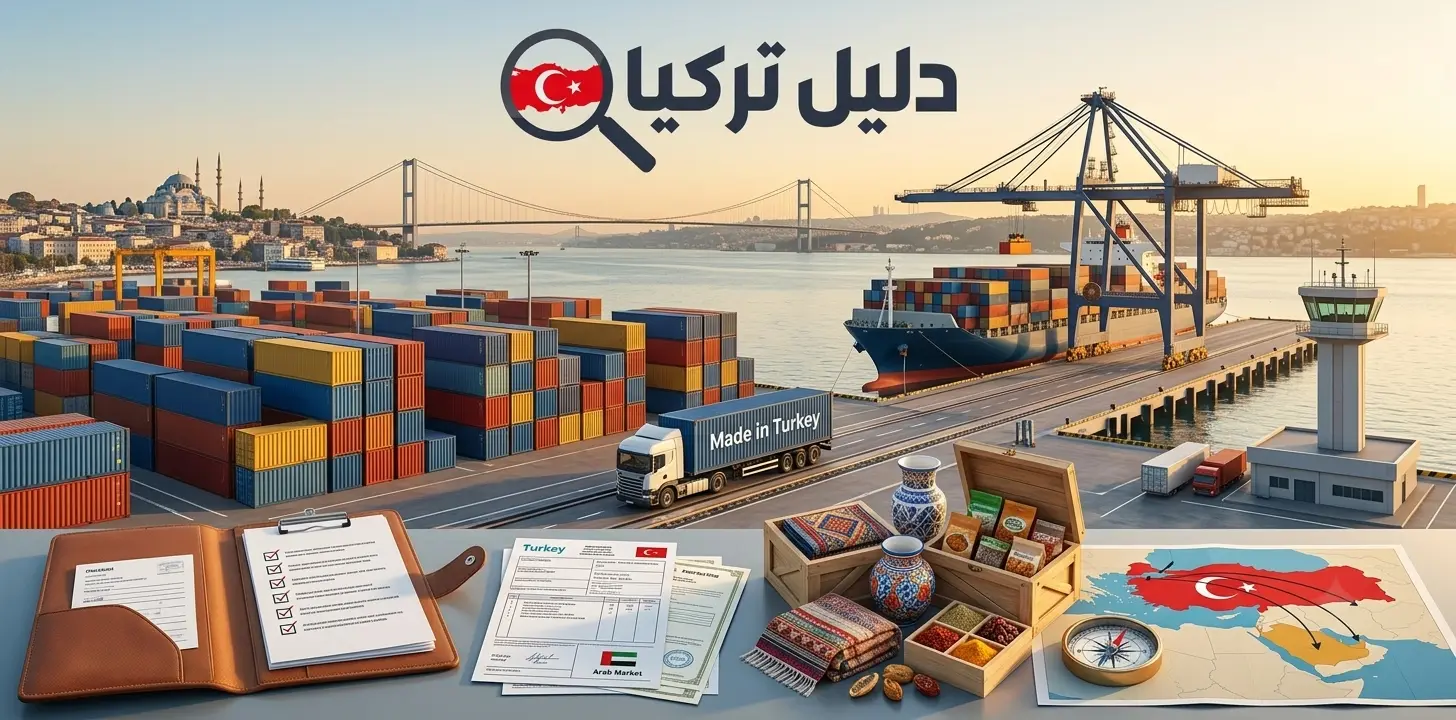
How to Import from Turkey to Saudi Arabia in 2026: SABER, Customs Duty, VAT and Shipping Short answer: to import from Turkey into Saudi Arabia you need a Saudi…
Short answer: to import from Turkey into Saudi Arabia you need a Saudi commercial registration (CR) with an import activity, an importer account on ZATCA's FASAH platform, and — for almost every shipment — SABER conformity certificates issued before the goods sail. Turkish goods pay the full Saudi customs duty (there is no Turkey–GCC free trade agreement in force), usually 5% to 15% of the CIF value depending on the HS code, plus 15% import VAT. Sea freight from Mersin to Jeddah takes roughly 4–7 days.
This guide covers only what is specific to Saudi Arabia. For the general process — choosing a product, finding and verifying a factory, samples, contracts and payment — read our step-by-step guide to importing from Turkey first.
Saudi Arabia import requirements at a glance
ItemWhat applies to Turkish goods
Importer registrationSaudi CR with import activity + importer registration on FASAH (ZATCA)
ConformitySABER Product Certificate (PCoC) for regulated products + Shipment Certificate (SC) for each shipment
Customs dutyNo preferential rate for Turkey. GCC minimum 5%; many lines 5–15%, some 20% or more after the 27 Nov 2025 tariff update
VAT15% at import
Food, cosmetics, medicalSFDA registration; Arabic labelling; halal certificates for meat and poultry
Customs declarationFiled on FASAH at least 48 hours before the goods arrive
Main portsJeddah Islamic Port (Red Sea), King Abdulaziz Port Dammam (Gulf)
Sea transitMersin → Jeddah about 4–7 days; Mersin → Dammam about 6 days or more (check carrier schedules)
Step 1: Make sure your company can import
The Saudi buyer must hold a commercial registration whose activities include import or trade, and must register as an importer on FASAH, ZATCA's single window for customs. Without both, the shipment cannot be declared. There is no general "import licence", but regulated goods need their own approvals: SFDA for food, cosmetics and medical products, and SASO technical regulations for most consumer and industrial products.
The customs declaration is filed on FASAH by the importer or a licensed customs broker at least 48 hours before arrival. In practice most first-time importers use a broker; talk to one before you pay the Turkish factory, not after the container lands.
Step 2: Get SABER certificates before shipping
SABER is SASO's online conformity platform, and it is the step that stops more Turkish shipments than anything else.
- Product Certificate of Conformity (PCoC): issued per product model for products covered by a SASO technical regulation. The 12-digit HS code decides which regulation applies. A PCoC is generally valid for one year.
- Shipment Certificate (SC): issued in SABER for every shipment, linked to a valid PCoC. Since 2025 an SC is required for practically all imports, including non-regulated goods.
- No more undertaking letters: since 1 January 2025 customs no longer accepts the old "letter of undertaking" in place of a certificate. A shipment that arrives without its SC risks being re-exported at your cost.
The SABER account belongs to the Saudi importer; the Turkish manufacturer supplies test reports and technical files, and an approved certification body issues the certificate. Ask the factory early whether it already holds test reports (for electrical products, IECEE CB reports are commonly used). Certification fees vary by certification body, so get a quote before you confirm the order.
Step 3: Find your HS code and duty rate
Turkish-origin goods do not get preferential treatment in Saudi Arabia: Turkey and the GCC opened free trade talks in 2024, but no agreement is in force. You therefore pay the normal Saudi tariff rate.
- The GCC common external tariff starts at 5% of the CIF value (cost + insurance + freight).
- Saudi Arabia raised duties on many lines in June 2020 and again on 27 November 2025. Many food, agriculture and light-manufacturing lines are now 5–15%, some reach 20% or more, and building materials, chemicals, plastics and machinery were also raised.
- Since January 2025 the Saudi tariff uses 12-digit HS codes. Look up your exact code in ZATCA's Integrated Tariff (zatca.gov.sa → E-Services → Customs Services). An old 8-digit code from a Turkish invoice is not enough.
Then add 15% VAT, charged at import on the customs value plus duty, and port, handling and broker fees.
Step 4: Prepare the documents
- Commercial invoice (with the importer's exact legal name, the HS code and the country of origin)
- Packing list
- Bill of lading (sea) or air waybill
- Certificate of origin issued by the Turkish exporter's chamber of commerce
- SABER Shipment Certificate (and the PCoC reference)
- SFDA approvals, health certificates and halal certificates where relevant
Rules on embassy legalisation of invoices and certificates of origin have been relaxed in several countries, but practice varies and some banks still ask for it for letters of credit. Confirm with your Saudi broker whether your shipment needs it. Our import documents checklist explains each document in detail.
Step 5: Food, cosmetics and other SFDA products
If you import food, supplements, cosmetics or medical supplies, SFDA rules apply on top of customs:
- The foreign factory must be registered with SFDA, and the importer needs a valid CR.
- Labels must be in Arabic (other languages may be added if they match the Arabic text).
- Meat and poultry need a halal certificate for the factory and for each shipment, from a body approved by SFDA's Saudi Halal Center.
Turkish food exporters with Gulf experience usually already have Arabic labels and halal certificates. Ask for them before sampling. Browse Turkish food and beverage manufacturers on Dalil Turkey.
Step 6: Choose the route and ship
- Sea to Jeddah: best for western Saudi Arabia (Jeddah, Makkah, Madinah). Mersin → Jeddah is roughly 4–7 days at sea, plus port time.
- Sea to Dammam: for Riyadh and the Eastern Province, via Suez and around the Arabian Peninsula, so it is longer.
- Land: trucking through Syria and Jordan reopened in 2025–2026, but it depends on the security situation and border procedures. Ask a forwarder for current transit times before relying on it.
- Air: for samples and small, high-value goods.
For freight prices and how to compare quotes, see shipping costs from Turkey to Saudi Arabia and the UAE. You can find freight forwarders in Istanbul on Dalil Turkey.
How to estimate the landed cost
Example method (illustrative, not a quote): factory price FOB Mersin + sea freight + insurance = CIF value. Customs duty = CIF × your HS rate. VAT = 15% × (CIF + duty). Then add SABER certificate fees, port and handling charges, the broker's fee and inland delivery. Only compare this total with your selling price, never the factory price alone.
The 5 most common mistakes
- Shipping before the SABER certificates are issued. Without an SC the goods can be held or re-exported.
- Using the wrong HS code. A wrong or 8-digit code gives the wrong duty and the wrong SASO regulation, especially after the November 2025 changes.
- Assuming Turkish goods are duty-free. There is no Turkey–GCC FTA in force; budget for full duty plus 15% VAT.
- Missing Arabic labels or SFDA registration for food and cosmetics.
- Paying an unverified supplier. Check the company before transferring money; see how to verify a Turkish company.
Frequently asked questions
Is there a free trade agreement between Turkey and Saudi Arabia?
No. Turkey and the GCC started free trade negotiations in 2024, but nothing is in force, so Turkish goods pay the normal Saudi duty.
What is the customs duty on Turkish goods in Saudi Arabia?
It depends on the 12-digit HS code: at least 5% of the CIF value, commonly 5–15%, and higher for some products after the November 2025 update. Check the exact rate in ZATCA's Integrated Tariff.
Who applies for the SABER certificate, the Saudi buyer or the Turkish factory?
The Saudi importer owns the SABER account and submits the request; the Turkish factory provides test reports and technical documents to the certification body.
How long does shipping from Turkey to Saudi Arabia take?
By sea, roughly 4–7 days from Mersin to Jeddah and longer to Dammam, plus loading and clearance time. Air freight takes a few days door to door.
Find Turkish suppliers for the Saudi market
Dalil Turkey lists Turkish manufacturers and exporters with Arabic and English profiles, so Saudi buyers can compare factories by sector and city and contact them directly. Start with the Turkish B2B marketplace, or post what you need on the buyer requests board and let suppliers come to you.
Last checked: November 2026. Customs rules change often; confirm duty rates and certificate requirements with ZATCA, SASO or a licensed Saudi customs broker before you ship.