Import Documents from Turkey: The Complete Checklist for Arab Buyers A successful import transaction from Turkey does not depend only on choosing the supplier,…
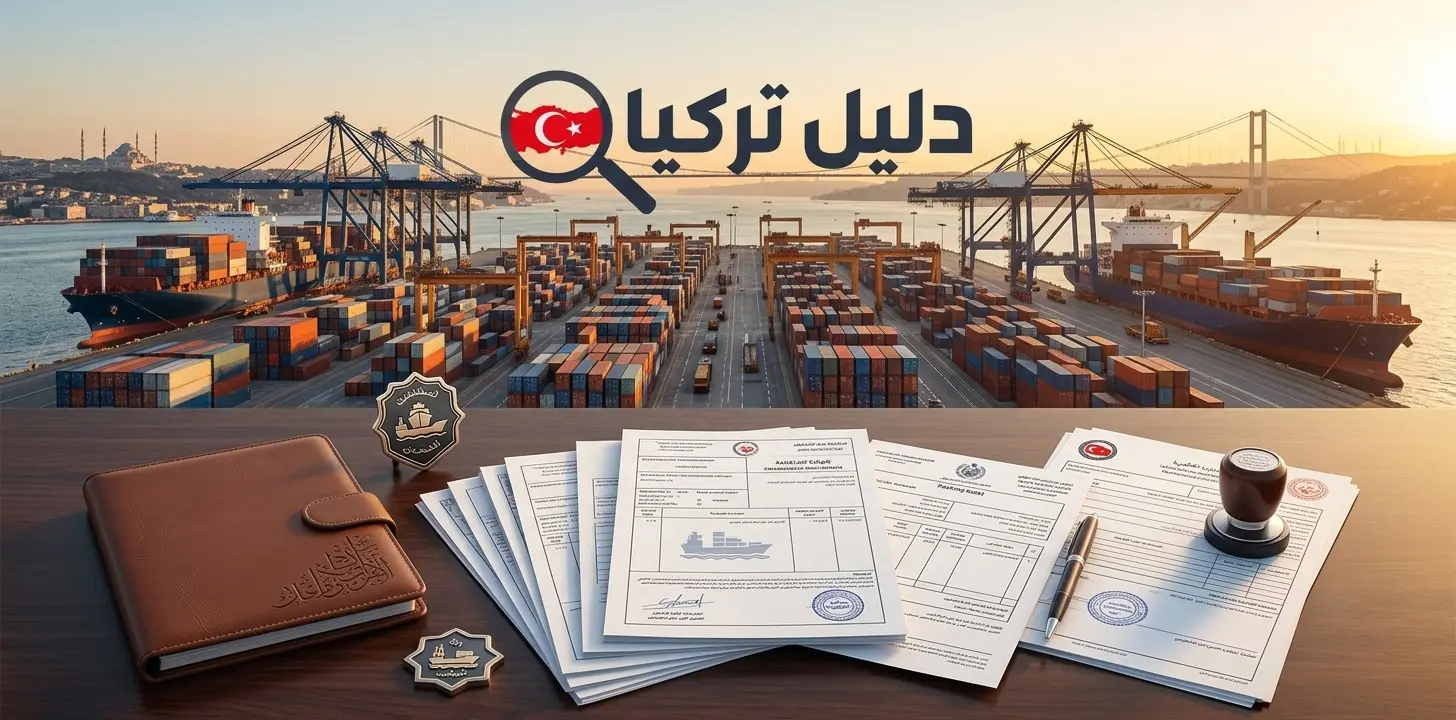
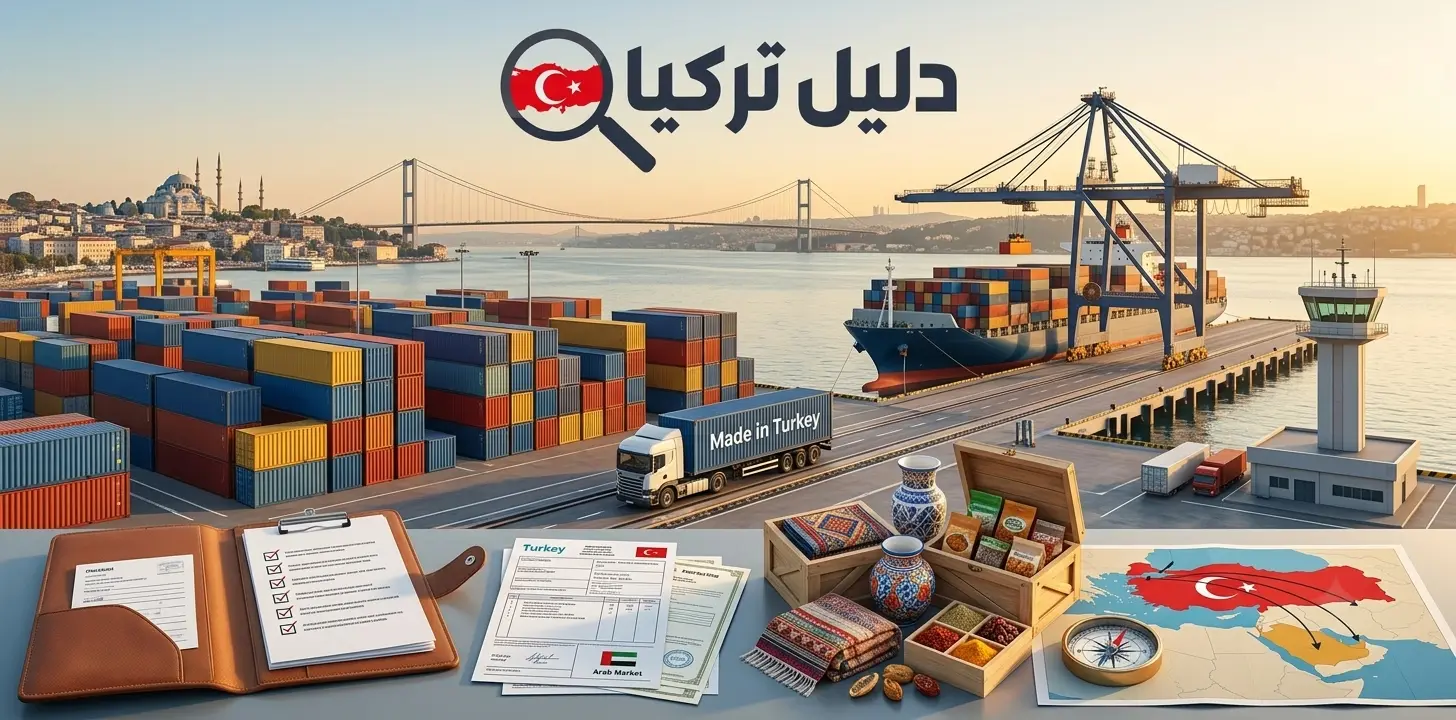
A successful import transaction from Turkey does not depend only on choosing the supplier, negotiating the price, and arranging freight. Commercial and customs documents are a central part of the transaction. Any error can lead to clearance delays, penalties, additional storage fees, or even rejection of the goods in the importing country.
Required documents differ according to product type, shipping method, destination country, shipment value, and whether the goods need conformity certificates, health approvals, or technical permits. However, there is a group of documents that appears in most commercial shipments from Turkey. Importers should understand them before paying the final balance or authorizing the supplier to ship the goods.
This guide explains the core import documents from Turkey, the purpose of each document, common mistakes to avoid, and how to organize your files so that the shipment reaches your warehouse without unnecessary surprises.
Start with the importing country’s requirements
Before asking the supplier to prepare any document, you need to know what customs authorities and regulators require in your own country. Do not rely only on the Turkish supplier’s experience. The supplier may understand export procedures from Turkey but may not know the specific requirements of Saudi Arabia, the UAE, Iraq, Jordan, Egypt, or another Arab market.
Contact a reliable customs broker in the destination country before confirming the order. Send a product description, photographs or catalogue, expected HS code if available, country of origin, shipping method, and approximate invoice value. Ask the broker to clarify expected duties, permits, certificates, labelling requirements, and any import restrictions.
This step is particularly important because some products need additional procedures. Food may require health certificates, analysis reports, ingredient information, and expiry data. Electrical devices may require conformity certificates and technical testing. Construction materials may need quality reports or inspection certificates. Cosmetics, medical products, and children’s goods may be subject to registration or special approvals.
The proforma invoice is the document normally issued by the supplier before production begins or before receiving the first payment. It is not the final invoice used for customs clearance, but it is an important document for recording the commercial agreement between you and the supplier.
The proforma invoice should include the seller’s and buyer’s names and addresses, product description, quantity, unit price, total price, currency, packaging type, production schedule, payment terms, agreed Incoterm such as EXW, FOB, or CIF, and loading or destination port where relevant.
Review the proforma invoice carefully before paying a deposit. Make sure the description is not overly general, such as “household goods” or “clothing.” It should be clear and include model numbers, item codes, and essential specifications. The supplier name on the invoice should also match the company you will contract with or send money to.
A proforma invoice is not a replacement for a detailed contract in large transactions or customized orders. However, it remains an important reference for price, payment, and quantity terms, and it can be used when requesting freight quotations, opening a letter of credit, or reviewing the transaction with your bank.
Commercial Invoice
The commercial invoice is one of the most important documents in any import shipment. It is issued after goods are prepared or shipped and is used by customs to assess product value, duties, and taxes. It is also used by customs brokers, banks, insurers, and regulatory bodies.
The commercial invoice should include complete legal details for supplier and importer, invoice number and date, accurate product description, quantity, unit price, total value, currency, country of origin, Incoterm, and payment method where necessary.
The product description on the commercial invoice must match the packing list, bill of lading, and certificate of origin. If the invoice says the shipment contains “ceramic tiles” while the packing list says “sanitaryware,” or if the quantity differs across documents, you may face clearance delays or requests for corrected documents.
Do not ask a supplier to reduce the invoice value improperly to lower customs duties. This practice can create legal problems, penalties, customs reassessment, or difficulty with insurance claims if goods are damaged. Use the true commercial value agreed in the contract and supported by bank transfers.
Packing List
The packing list explains how goods are distributed inside the shipment. It differs from the commercial invoice because its purpose is not to establish value, but to show the actual contents of cartons, pallets, crates, boxes, or containers.
A packing list should include the number of packages, packaging type, carton or pallet numbers, description of the contents of each group, net weight, gross weight, dimensions or volume where relevant, and total number of units.
Customs authorities use the packing list during inspection, and importers use it at delivery to confirm that the shipment is complete. If you have 500 cartons, the packing list should help you identify how many cartons are on each pallet or in each group, what products they contain, and how this matches the invoice and bill of lading.
For shipments containing more than one product, do not accept a vague packing list. Request detailed product information by item code, model, colour, or size, especially for clothing, textiles, furniture, construction materials, and goods that require inventory tracking after arrival.
Bill of Lading
The ocean bill of lading is the document issued by the shipping line or its agent to confirm that cargo has been received and shipped. It is one of the most important documents in sea freight because it contains details of the shipper, importer, loading port, destination port, vessel or voyage, number of containers or packages, and cargo description.
For air freight, the equivalent document is the Air Waybill. For road freight, a road-transport document may be issued according to the route and carrier. Regardless of the shipping method, ensure that the importer name, cargo description, package count, and destination point match the commercial invoice and packing list.
There is a difference between an original bill of lading, an electronic release, and a telex-release bill of lading. The way you collect cargo depends on the bill type, freight terms, and payment structure. If you use a letter of credit or a payment method linked to documents, the required bill type should be specified precisely in the contract or letter-of-credit terms.
Before the supplier issues the final bill of lading, request a Draft Bill of Lading. Review it carefully because correcting names, addresses, or package numbers after the final document is issued can create fees and delays.
Certificate of Origin
The certificate of origin confirms that goods originate in Turkey or another country according to the source of production. It is important for customs and may affect duty treatment, eligibility under trade arrangements, or acceptance of goods in the destination country.
Certificate-of-origin details should match the commercial invoice: supplier name, importer name, product description, quantity, and value where stated. You should also confirm that the stated origin is genuine and correct, especially if the supplier is a trading company collecting goods from multiple sources.
Some products may be manufactured or assembled in Turkey using imported components. In such cases, the supplier should be able to explain the product origin and issue documents correctly. Do not assume that every product purchased from Turkey automatically has Turkish origin.
Ask your customs broker whether the certificate of origin needs authentication by a specific authority, chamber of commerce, embassy, or consulate, because requirements vary by country, product category, and shipment value.
A certificate of conformity is a document confirming that a product complies with standards or regulations required by the importing country or a designated regulatory authority. It is more commonly required for certain categories, including electrical goods, construction materials, children’s toys, safety products, selected household goods, and industrial items.
Do not use “certificate of conformity” as a general label without knowing who issued it and what it covers. Some countries require a certificate from an approved conformity-assessment body, some require pre-shipment inspection, some require product registration on a local platform, and some require only technical documents and test reports.
Before paying the supplier’s final balance, confirm that the required certificate has been issued for the correct product name and supplier or manufacturer, that it remains valid, and that it covers the item code or model you will import. Do not rely on a certificate for a different product, an outdated version, or another company.
For construction materials, additional technical reports may be needed for strength, thickness, fire resistance, insulation, or product quality. For electrical goods, you may need voltage, frequency, safety, and local compliance information.
Inspection and Quality Reports
An inspection report is not legally required for every shipment, but it is an important buyer-protection tool, especially when working with a new supplier or buying products whose quality can vary between batches. The report may be issued by an independent inspection company, accredited laboratory, or a conformity body required in the importing country.
Inspection can cover quantity, specifications, dimensions, colour, packing, labelling, container loading, visible defects, and conformity with the approved sample. For technical products, it may also cover tests such as strength, density, abrasion resistance, or electrical safety.
If your contract links final payment to inspection results, define acceptance and rejection standards from the beginning. Do not write only that “inspection must be good.” Specify the acceptable defect level, sampling method, reference specifications, and what happens if a non-conformity appears.
Keep a copy of the inspection report together with product photographs and the approved sample. These documents can be useful when making a claim against the supplier or insurer, or when a dispute arises over quality.
Marine Insurance Certificate
If the goods are insured, the marine insurance certificate or policy sets out the type of coverage, insured value, shipment details, and claim conditions in the event of damage or loss. Insurance is particularly important for fragile cargo, high-value goods, containerized shipments, or cargo moving through more than one transport mode.
Do not assume that a CIF term automatically means the insurance coverage is sufficient for every risk. Review the scope of coverage, exclusions, insured value, and whether it covers partial damage, moisture, theft, package loss, or handling damage.
If goods arrive damaged, photograph the damage immediately, record your observations on the delivery record where possible, and contact the insurer or agent within the stated time limit. You will often need the invoice, bill of lading, packing list, damage photographs, and a survey report or record from the carrier or port.
Health, Agricultural, and Food Certificates
If you import food, agricultural products, or goods of animal or plant origin, you will often need additional documents. These may include health certificates, veterinary certificates, phytosanitary certificates, laboratory-analysis reports, ingredient lists, or halal certificates depending on the product and destination market.
Confirm production and expiry dates, storage requirements, required transport temperature, additives, and allergen details where needed. Labels must also comply with destination-country language and legal requirements. This may include Arabic text, importer details, net weight, country of origin, ingredients, and expiry date.
Do not ship food or sensitive goods before confirming whether registration is required in your country. Some countries do not allow a product to enter for the first time until the company, product, or brand has been registered with the relevant authority.
Product-Specific Certificates
Some products need special technical or regulatory documents that do not appear in every import transaction. Examples include cosmetics, medicines and medical devices, electrical goods, batteries, chemicals, detergents, children’s toys, safety equipment, and machinery.
For cosmetics, you may need ingredient lists, safety reports, factory information, and product registration. For electrical goods, you may need test reports, technical data, safety certificates, and labels suitable for the destination voltage. For chemicals, you may need a Safety Data Sheet, often called SDS or MSDS, together with transport, storage, and classification information.
The basic principle is that you should never assume an invoice and bill of lading are enough for every product. Each category has different regulatory responsibilities, and one missing document can prevent release of the shipment or create significant additional costs.
Branding and Labelling Documents
If you import goods under your own private label, keep documents showing the factory’s approval to use your name or logo, approved design files, label samples, and any agreement relating to intellectual property or distribution exclusivity.
Make sure that label information matches destination-country requirements. It may include product name, country of origin, importer name, warnings, size or weight, ingredients, barcode, and production or expiry date where appropriate.
Do not wait until goods arrive to discover that labels do not include Arabic, country of origin is missing, or the importer name is incorrect. Relabelling after arrival can be expensive and may not be allowed in some situations.
Payment and Bank-Transfer Records
Keep proof of every payment sent to the supplier. This includes bank-transfer copies, bank confirmation notices, proforma invoices, and the contract or purchase order. These documents are important for proving the true commercial value, dealing with banks, and supporting any later claim or customs review.
If payment is made through a letter of credit, keep a copy of the letter-of-credit terms, required documents, and any amendments. Supplier documents must comply with the stated conditions as closely as possible, because mistakes in names, dates, or product descriptions can cause document rejection or delay.
Do not pay the final balance before reviewing the agreed production photographs, inspection report, or shipping documents, unless the contract and payment method specify a different protected arrangement.
Request document drafts before final issue
One of the best practices is to ask the supplier to send draft documents before final issuance. Request draft versions of the commercial invoice, packing list, certificate of origin where available, and bill of lading before approval.
Review the following details in every document:
- Importer name, address, and tax or commercial registration number where required
- Supplier’s legal name and address
- Invoice number and date
- Product description, item code, or model number
- Number of units, cartons, and pallets
- Net and gross weight
- Value and currency
- Country of origin
- Port of loading and port of destination
- Vessel name or flight number where available
- Agreed Incoterm
- Container and seal details for sea freight
Any discrepancy should be corrected before shipment or before final originals are issued. Waiting until the shipment arrives makes corrections more difficult and more expensive.
How to organize your import-document file
Create both a digital and physical file for every shipment. Give the file a clear name containing the supplier name, invoice number, and shipment date. Store the contract, proforma invoice, bank transfers, important correspondence, sample photographs, inspection reports, commercial invoice, packing list, certificate of origin, bill of lading, insurance, and product-specific certificates inside it.
Use organised file names, such as “01-Proforma,” “02-Contract,” “03-Commercial-Invoice,” “04-Packing-List,” “05-Certificate-of-Origin,” “06-Bill-of-Lading,” “07-Inspection,” and “08-Insurance.” This organisation saves time when a customs broker, bank, or insurance company urgently requests a specific document.
Keep searchable, legible copies of every document rather than unclear photographs only. Also make sure that final files are the approved versions, not outdated draft copies.
Common mistakes in import documents
- Shipping before understanding the importing country’s requirements
- Differences between the commercial invoice, packing list, and bill of lading
- Using vague or inaccurate product descriptions
- Issuing the invoice in a company name different from the contract or bank account without explanation
- Failing to review the draft bill of lading before it is issued
- Forgetting the certificate of origin or not confirming authentication requirements
- Assuming an old conformity certificate or one for another product is enough for the current shipment
- Failing to prepare Arabic labels or required product information before production
- Not keeping proof of transfers and payments
- Sending documents late to the customs broker or bank
- Relying on unclear image copies instead of approved originals or electronic documents
- Not keeping inspection reports or photographs of goods before loading
Documents are not simply papers travelling with the goods. They are the legal and commercial evidence of what you purchased, what you paid, what the supplier shipped, and what you are entitled to bring into your country. The earlier you review them, organize them accurately, and connect them to the contract, sample, and inspection process, the safer, faster, and more scalable your imports from Turkey will become.