Minimum Order Quantity (MOQ) with Turkish Suppliers: What You Can Negotiate and How to Reduce First-Order Risk When you contact a Turkish factory or supplier,…
When you contact a Turkish factory or supplier, you will quickly encounter the term Minimum Order Quantity, commonly known as MOQ. This figure defines the smallest quantity, value, number of cartons, or production batch that a supplier is willing to sell or manufacture in one order. However, it is not always a final number that cannot be discussed, and not every product in a catalogue is subject to the same minimum.
Understanding MOQ is important for Arab importers, especially during a first transaction with a new supplier. Ordering a large quantity simply to pass the MOQ can tie up capital in slow-moving inventory. On the other hand, insisting on an extremely small quantity may make the price unattractive or cause the factory to decline the order. The solution is not to accept the first number sent by the supplier. It is to understand why the minimum exists, what can be adjusted, and how to build an order that suits your capacity while remaining worthwhile for the supplier.
This guide explains MOQ in dealings with Turkish suppliers, the difference between order minimums and production minimums, the factors that determine them, what can be negotiated in clothing, textiles, construction materials, furniture, packaging, and general products, and how to avoid mistakes that increase the cost of your first order.
What does MOQ mean?
MOQ is the smallest quantity, financial value, number of cartons, pallets, or containers that a supplier accepts for one sale or production order. It can be measured differently depending on the industry. In clothing, it may be the number of pieces per model, colour, or size. In fabric, it may be the number of metres per colour. In ceramic, it may be square metres or pallets. In furniture, it may be a number of pieces or an order value. In ocean shipping, it may be practically connected to the economic threshold for LCL cargo or a full container.
It is important not to confuse a manufacturer’s MOQ with the MOQ of a trading company. A factory may require a higher quantity because starting a production line, purchasing raw materials, changing colours, or preparing a mould requires a certain volume. A trading company may accept a smaller quantity because it consolidates goods from several factories or sells ready stock, but it may add a higher margin to the product price.
You should also distinguish between MOQ and available stock. A supplier may say that the regular minimum is 1,000 pieces but may accept 100 or 200 pieces of a model already available in the warehouse. Therefore, do not ask only, “What is your MOQ?” Ask: “What is the minimum for ready stock, and what is the minimum for a product with my own branding, colour, or packaging?”
Why do Turkish suppliers set minimum order quantities?
Suppliers do not set MOQs simply to make purchasing difficult. There is usually a real cost behind the figure. When a factory starts a line for a specific colour, model, or size, it uses worker time, machinery, and energy. It may also need to buy raw materials, change machine settings, prepare moulds, or arrange custom printing and packaging.
In clothing, a factory may need to cut fabric according to a pattern, prepare thread in a certain colour, set sizing, and arrange labels and private branding. In plastics, there may be mould, machine-running, or printing costs. In furniture, the minimum may be linked to sourcing a particular fabric, wood type, or fitting. In construction materials, it may relate to production batches, pallet packing, or container-loading requirements.
The more customised the order, the higher the MOQ is likely to be. A standard product already listed in the catalogue or held in stock may be sold in smaller quantities. However, if you request a special colour, unusual size, private logo, custom package, or different material, the supplier needs to recover the cost of customization, which can mean a larger minimum or higher price.
MOQ is not always one number
One of the biggest mistakes is to view MOQ as a single number. In reality, the supplier may have several minimums in the same transaction:
- A total order minimum, such as USD 5,000 or USD 10,000
- A minimum per product or model
- A minimum per colour
- A minimum per size
- A minimum for printing, branding, or custom packaging
- A minimum for the first order or a new customer
- A shipping minimum, such as a number of cartons, pallets, or one container
Assume that a clothing factory requires 1,000 pieces as its MOQ. You need to know whether this means 1,000 pieces of one model, whether the quantity can be divided among models, whether it must be one colour, whether it can be split across three sizes, and whether the same price applies if you request five colours rather than two.
Each of these questions changes the business decision. Sometimes you can accept the overall MOQ but distribute the quantity in a way that suits your market. In other cases, the supplier may be flexible with colours and sizes if you maintain a sufficient quantity per design.
How to ask about MOQ professionally
Instead of sending a short message such as “What is the minimum order?”, send a clear request that explains your needs. State the product, your expected initial quantity, colours, sizes, whether you need private branding, and what you plan to do later if the trial succeeds.
You can ask the supplier in this way: “We are interested in this product for the Saudi/UAE/Iraqi market. We need an initial trial order and would like to know the minimum quantity for ready stock, the minimum if we use our own branding, and whether quantity can be divided between several colours or sizes. Please also explain the price difference at each quantity level.”
This gives the supplier enough information to propose a workable solution. It also shows that you are a serious buyer with a clear market, rather than someone requesting general prices without a purchasing plan.
What can actually be negotiated?
Not every part of MOQ can be negotiated equally, but several points can be discussed intelligently. The first is first-order quantity. Some suppliers accept a smaller trial order when the product is available in stock or when you can show a clear future purchasing plan.
The second point is quantity allocation. A factory may not agree to reduce the total minimum but may allow you to distribute it across colours, sizes, or related models. For example, instead of 1,000 pieces in one colour, the company may accept 500 pieces in two colours or 250 pieces in four colours, provided a minimum per colour is respected.
The third point is packaging. Private packaging, custom printing, and branded labels increase MOQ in many situations. You may begin with the factory’s standard packaging for the first order and move to custom packaging after proving sales performance.
The fourth point is ready-stock products. Always ask which models are available in stock. Buying ready inventory may reduce both MOQ and production time, but it requires careful checking of quality, sizes, colours, and available quantities before payment.
The fifth point is unit price and commercial terms. If the supplier does not agree to reduce quantity, you may negotiate better pricing on repeat orders, a free sample, better packaging, additional units, reduced logo or mould cost, or safer payment terms.
When is a supplier justified in refusing to reduce MOQ?
Not every refusal means that the supplier is difficult or inflexible. Sometimes refusal is logical and professional. If the order requires special fabric, a non-stock colour, a new mould, custom printing, technical certification, or independent testing, a small quantity may simply be uneconomical for the factory.
A good supplier explains the reason for the minimum instead of merely saying, “This is our policy.” For example, the supplier may explain that fabric dyeing requires 500 metres per colour, a printing machine needs a certain number of packages to cover setup cost, or the raw-material supplier sells materials only above a minimum volume.
In these situations, do not try to force the factory into an unprofitable transaction. Ask for alternatives instead: an available colour, stock model, alternative material, standard packaging, or a trading company that can consolidate smaller quantities from several sources.
MOQ in Turkish clothing and fashion
Clothing is one of the sectors where MOQ conditions vary significantly. For ready-made products available in wholesale shops or export warehouses, you may be able to buy a limited number of pieces or cartons. For production under your own brand, the minimum is usually higher because of fabric, patterns, cutting, sewing, labels, packaging, and size distribution.
Before accepting the quantity, define the size breakdown you require. It is not enough to order 1,000 pieces if 60 percent of them are in sizes that do not move in your market. Request the available size chart, then distribute the order according to your expected sales pattern.
For seasonal garments, MOQ should be aligned with the sales period. Do not order a large quantity of winter coats, Eid clothing, or school garments if production and shipping time will cause goods to arrive after the season is over. Sometimes a smaller MOQ at a higher unit price is better than a large MOQ that arrives at the wrong time.
MOQ in fabrics and home textiles
For fabrics, minimums are often linked to fabric type, colour, dyeing, and printing. A supplier may accept a low quantity of ready colours but require a larger quantity for custom colours or design-based printing. You should therefore identify whether you need available fabric or specially dyed or printed production.
For towels, bed linen, and home-textile products, MOQ is often connected to colour, embroidery, logo, and packaging. You can start with white or standard-colour products and a simple label, particularly when testing the market. After the product succeeds, you can move to embroidery, special colours, or boxes carrying your own brand.
Remember that textiles need quality evaluation before you commit to volume. The sample should allow you to assess touch, weight, towel absorbency, stitching strength, colour fastness, and shrinkage after washing where relevant.
MOQ in packaging and plastics
Packaging is one of the sectors where MOQ is directly linked to customization. Printed bags, boxes, labels, cartons, plastic containers, and films may require moulds, printing cylinders, or setup processes. As a result, the minimum can be high even if the product itself is small and inexpensive.
If you own a new brand, do not start with overly complex packaging. You can choose a simple design, buy standard packaging and add your own label locally, or use the factory’s packaging during the first stage. This reduces MOQ and gives you an opportunity to test the product before investing heavily in printing and design.
Ask clearly about mould, printing-cylinder, or design costs and whether they are paid once or repeated with every order. Also ask about mould ownership: Does it become your property after payment, and can it be used for future orders?
MOQ in furniture and bulky products
In furniture, MOQ is not always a large number of pieces. It may be a full container, a minimum monetary value, or a specified quantity of tables, chairs, or bedroom sets. The reason is not only production; it is also logistics. Furniture uses substantial volume, and partial shipping can become expensive.
If you are testing the market, look for flat-pack, knock-down, or compactly packed models where suitable for the product. This can reduce volume and improve shipping efficiency. However, do not sacrifice packaging quality or product safety, because damage to one furniture item can remove a large part of the expected profit margin.
You can negotiate a product mix inside a container. Instead of buying 100 units of one model, the supplier may allow several models and colours to be combined in one container, provided certain product minimums are respected. This flexibility is useful for importers who want to offer a varied range in their showrooms.
MOQ in construction materials and heavy goods
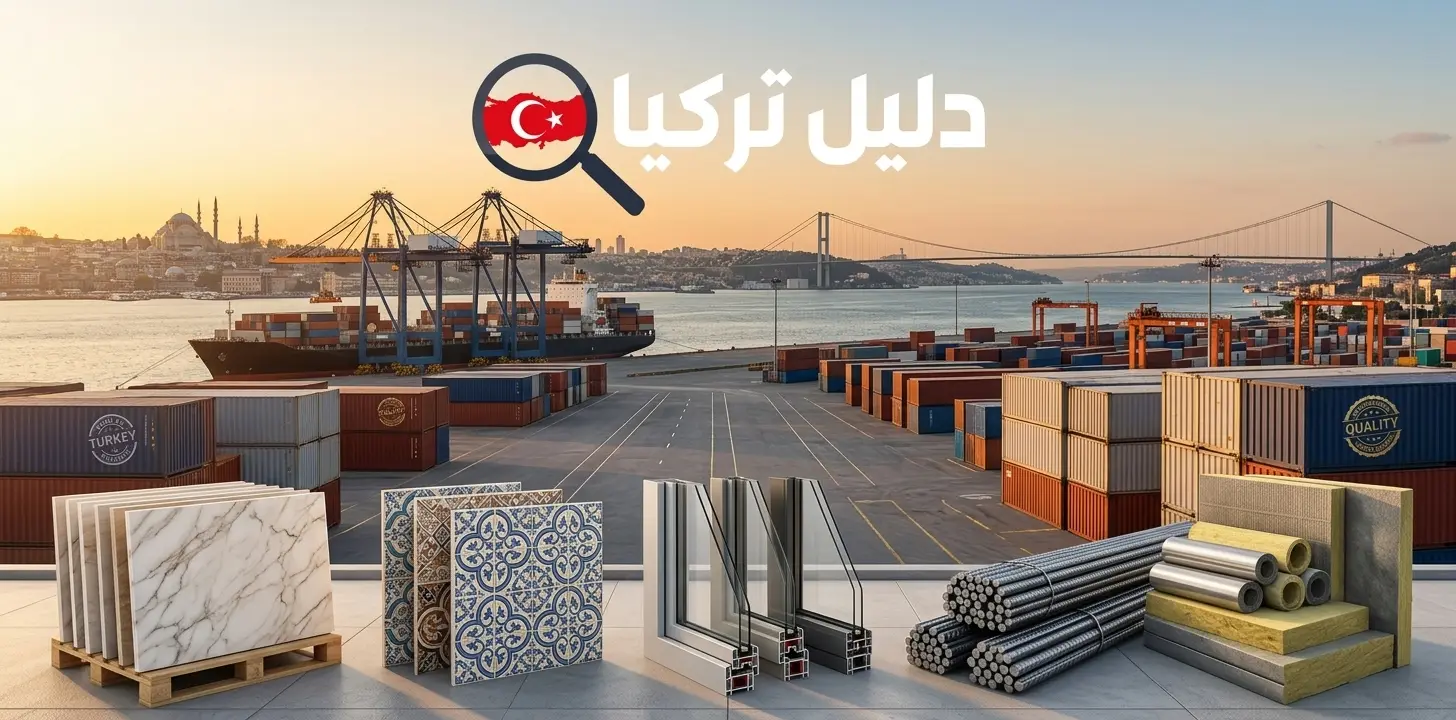
For construction materials such as ceramic, marble, steel, doors, and sanitaryware, MOQ is often connected to packaging, pallets, containers, and production batches. Small quantities may be possible, but their logistics cost may be very high compared with larger volumes.
For ceramic, do not look only at carton count. Ask about square metres per carton, pallet weight, number of pallets per container, and minimum quantity per design or production batch. For marble, ask about dimensions, thickness, type, grade, wooden packing, and the permitted level of waste or breakage.
For steel and metal products, review total weight, loading method, shipping requirements, quality certificates, and the supplier’s ability to provide required documents. Larger quantities are often more efficient in this sector, but do not purchase a volume beyond your storage or sales capacity merely to reduce the price per tonne.
Creating a trial-order strategy
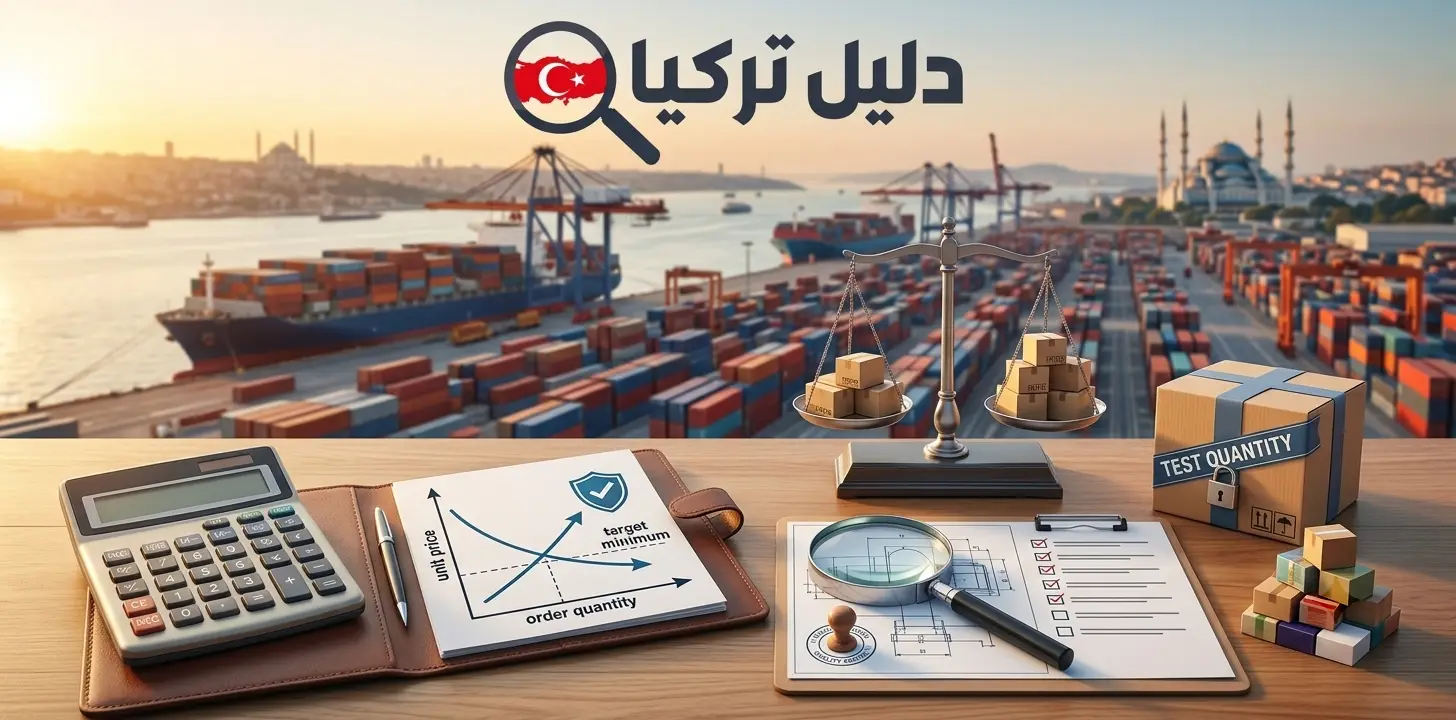
The best solution for a new importer is not always to reduce MOQ to the lowest possible number. It is to design a smart trial order. A trial order should be large enough to test the market, product quality, supplier performance, shipping, and customs clearance, but not so large that one mistake creates a serious loss.
Begin with products with clear demand, lower-risk colours or models, and standard packaging where possible. Avoid buying too many highly different designs in the first order, because this complicates storage, marketing, and reordering. Instead, focus on a small group of products whose results can be measured clearly.
Before paying the deposit, prepare a plan for what happens if the product succeeds. What will the next quantity be? Which models will you increase? When will you move to custom packaging? This makes the supplier more willing to offer flexibility on the first order because they see the possibility of a continuing commercial relationship.
Using future purchase forecasts without unrealistic promises
Turkish suppliers are generally interested in buyers with a clear plan, but you should not exaggerate future commitments. Do not say that you will buy one container every month if you do not have confirmed demand or sufficient capital. If the supplier later discovers that the promises were unrealistic, trust will weaken and you may lose favourable terms.
Instead, provide a realistic forecast: “We want to test this product with a specified quantity. If it achieves our target sales rate within two or three months, we expect to reorder a larger quantity.” This is honest and shows the supplier that your plan is based on sales rather than statements.
You can also request a progressive agreement: one price for the trial quantity and a better price if the total value or quantity of your purchases reaches an agreed level within a stated period. This allows you to avoid a large one-time purchase while giving the supplier a clear view of the relationship’s growth potential.
Negotiate terms that reduce risk, not MOQ alone
Sometimes a supplier cannot reduce the quantity but can help you reduce risk in other ways. They may allow multiple colours to be combined, offer a shorter production time, provide photographs and video before shipment, accept independent inspection, add spare units, improve packaging, or allow final payment after inspection.
These terms can be more valuable than a small reduction in MOQ. An order of 1,000 pieces with good inspection, strong packaging, and staged payment can be safer than an order of 500 pieces without a sample, contract, or inspection.
Always ask: What is the real risk in this transaction? Is it tied-up capital, inconsistent quality, lead time, or difficulty selling? Then negotiate the condition that reduces that risk, rather than negotiating only the number.
Common MOQ negotiation mistakes
- Requesting a lower MOQ without understanding why the minimum exists
- Focusing on quantity while ignoring unit price, quality, and freight
- Accepting a large quantity only to obtain a lower price
- Failing to ask about ready stock and available alternatives
- Requesting full customization for a new brand in the first small order
- Using unconfirmed sales promises to justify a large purchase
- Not knowing the minimum per colour, size, or model
- Buying too broad a range in the first order without a clear sales plan
- Ignoring shipping and storage cost when comparing quantities
- Skipping samples and inspection before committing to an order beyond your capacity
MOQ is not an obstacle that must be broken at any cost. It is a commercial tool that must be understood and managed. The supplier needs a transaction that covers costs, while you need a quantity that fits your capital and market. When you understand the reason behind MOQ, request practical alternatives, and use a structured trial order, you can build a relationship with a Turkish supplier without exposing your business to unnecessary inventory or excessive financial risk.