Global Construction Trends for 2026 – High-Demand Smart and Eco-Friendly Turkish Materials The construction sector is no longer what it was a decade ago. Today…
Global Construction Trends for 2026 – High-Demand Smart and Eco-Friendly Turkish Materials
The construction sector is no longer what it was a decade ago. Today, sustainability and smart technology are the two key concepts shaping the industry. Smart importers are those who read market trends before they become mainstream and import the materials that will be in high demand tomorrow.
According to Global Market Insights, the green construction materials market is expected to reach USD 351.8 billion in 2026 and exceed USD 1 trillion by 2034. Thanks to its geographic location and industrial expertise, Turkey is well positioned to benefit from this trend.
The main drivers of demand for green and smart materials include stricter environmental regulations in most countries, energy savings that reduce building utility bills, growing environmental awareness, higher property values for green buildings, and government incentives that support sustainable construction.
According to Turkey’s 2026 Presidential Annual Programme, the country is expected to accelerate the green and digital transformation of its construction sector. The programme focuses on carbon-neutral concrete, artificial intelligence in design and construction, 3D-printed structures, and smart recycled materials that improve energy efficiency.
Leading Eco-Friendly Turkish Materials
Thermal Insulation Paints: These paints provide thermal insulation in addition to surface coating and can reduce energy consumption by 20% to 40%. Demand is increasing across the Gulf region and other hot-climate countries. They are produced by Turkish manufacturers such as Fixper Insulation and others. In the hot climates of Arab countries, air conditioning can account for more than 60% of electricity bills, and insulation paints can significantly reduce this consumption.
Natural Insulation Materials: These include natural fibres, wool, cork, and cellulose. They are environmentally friendly, biodegradable, and provide excellent thermal insulation, acoustic insulation, and fire protection. Demand is growing in Europe and the Middle East.
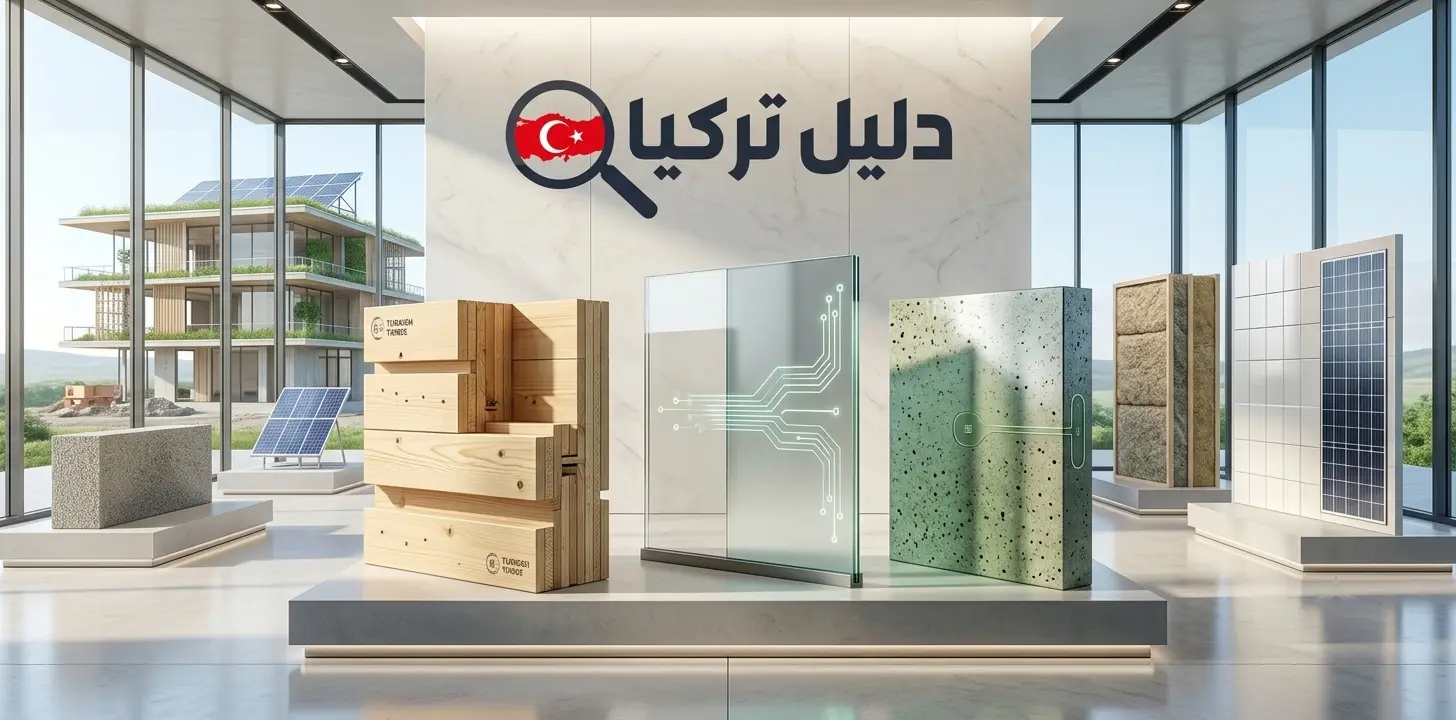
Translucent Concrete: This material allows natural light to pass through concrete, helping reduce energy use while creating a distinctive architectural appearance. It is used in façades, flooring, and architectural elements, and demand is rising in luxury projects.
Recycled Glass Bricks: Made from 100% recycled glass, these bricks are eco-friendly, insulating, and aesthetically appealing. They are used in façades, partitions, and decorative features, with growing demand in green building projects.
Smart Insulation Panels: These panels provide insulation that adapts to changing climate conditions. They offer superior energy efficiency and smart control by using phase-change materials (PCM). Demand is increasing in smart-building projects.
Green Materials Demand Statistics
The green construction materials market is estimated at USD 351.8 billion in 2026, with projected growth of approximately 2.8 times to reach USD 1 trillion by 2034. Annual growth is expected to range between 12% and 15%. Europe holds the largest share at 35%, followed by North America at 30% and Asia at 25%.
Across Arab markets, Saudi Arabia is experiencing rising demand for insulation materials, insulating paints, and green concrete. The UAE is seeing growing demand for smart buildings and recycled materials. Qatar continues to demand thermal insulation and sustainable materials. Kuwait is seeking passive-cooling solutions and insulation products. Egypt has demand for low-cost green building materials, while Iraq requires rapid and sustainable housing solutions.
Turkish Exports of Green Materials
According to statistics from the Turkish Exporters Assembly (TİM), exports of insulation paints grew by 25%, thermal insulation materials by 18%, recycled materials by 30%, green concrete by 15%, and smart materials by 40% between 2025 and 2026.
Target markets include the European Union, which has the strongest demand for green materials; the Gulf region, where major projects are adopting sustainability principles; North Africa, where green reconstruction projects are developing; and Iraq and Libya, where sustainable reconstruction presents significant opportunities.
How to Benefit from This Trend
Look for green suppliers by selecting Turkish factories that produce environmentally friendly materials. Request environmental certifications, such as LEED, BREEAM, or equivalent credentials. Invest in green marketing by positioning yourself as an importer of sustainable materials. Monitor regulations by understanding sustainability requirements in your country, and act early by importing materials that are likely to be in high demand in the future.
Promising opportunities include Saudi Arabia’s green projects, as Vision 2030 places sustainability at the centre of development; smart projects in the UAE, where Dubai and Abu Dhabi are leading the smart-building sector; Iraq’s reconstruction, which offers an opportunity to build sustainably from the ground up; projects in Qatar, where demand continues after the FIFA World Cup; and projects in Egypt, including the New Administrative Capital and large-scale housing developments.
Smart and eco-friendly construction materials are not merely a passing trend; they represent the future of the industry. Arab importers who recognise this direction early will gain a significant competitive advantage in their markets. Start now by identifying Turkish suppliers of green materials, learning about sustainability requirements in your country, and investing in products that will be in high demand in the years ahead.