Construction Materials Profitability: A Quarterly Comparison of Turkish Steel Prices with European and Chinese Markets Once an Arab importer understands the me…
Construction Materials Profitability: A Quarterly Comparison of Turkish Steel Prices with European and Chinese Markets
Once an Arab importer understands the mechanics of importing from Turkey, the most urgent question becomes: Is this business actually profitable? In a market where raw-material prices fluctuate daily and trade policies can change rapidly, the answer requires more than general impressions. It requires hard numbers, careful analysis, and regular updates.
The iron and steel sector is the backbone of the construction industry in every Arab country. Although Turkey holds an important global position in the production and export of these materials, every importer asks the same questions: Is Turkish steel more competitive than Chinese steel? And does Turkish quality justify any price difference?
This quarterly analysis addresses these questions using recent Turkish steel-industry data and international price indicators to provide a clearer view of the profitability of importing Turkish iron and steel during the current quarter of 2026.
Turkish Steel Exports in 2026
According to the latest data issued by the Turkish Steel Producers Association (TCUD) in July 2026, Turkey’s iron and steel exports recorded a slight decline during the first five months of the year. Total exports reached 6.13 million tonnes, down 2.9%, while export value fell by 4.7% to USD 6.13 billion. In May alone, exports reached 1.36 million tonnes, valued at USD 914 million, reflecting a modest decline in both volume and value.
These figures indicate an important trend: export volumes declined slightly, but export revenue declined at a faster rate. This suggests that the average export price per tonne also fell during the period.
When the figures are broken down by product type, the picture becomes more detailed. Flat products reached 2.5 million tonnes, down 8.4%, while long products reached 3.2 million tonnes, down 4.8%. Semi-finished products, however, recorded a notable increase to 451,000 tonnes, up 84.2%. This sharp increase may reflect a shift in the strategy of Turkish exporters in response to demand from regional reprocessing markets.
The European Union has traditionally been one of the largest markets for Turkish iron and steel. However, conditions changed in 2026. In January 2026, Turkey’s steel exports to the EU reportedly declined by 33%, mainly due to the Carbon Border Adjustment Mechanism (CBAM) and the new quota system that entered into force on 1 July 2026. According to TCUD estimates, potential export losses to the EU could reach 60% as a result of these policies.
Pressure on Turkish exports to Europe may encourage Turkish mills to seek alternative markets. For Arab importers, this may create opportunities to negotiate more competitive prices, particularly for regular-volume orders and repeat purchases.
Turkish, Chinese, and European Prices
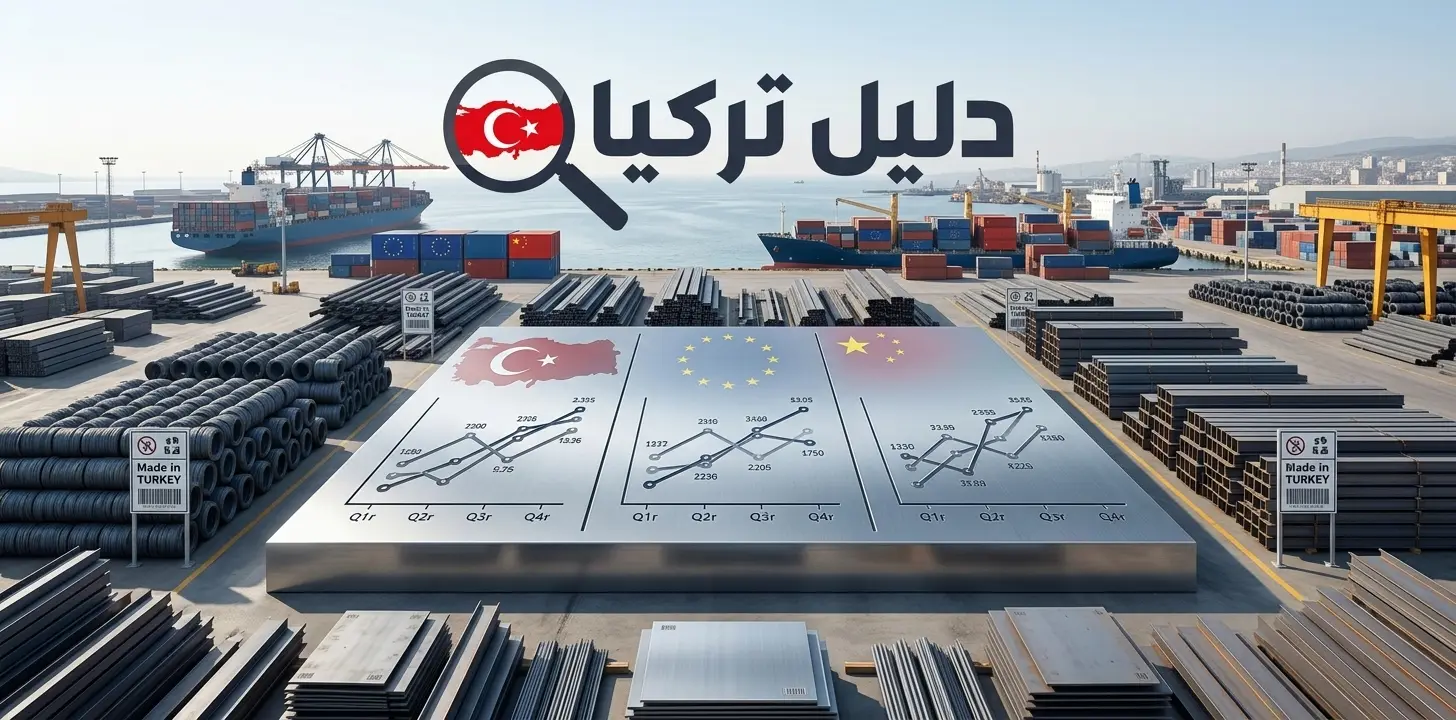
Based on global market reports and price indicators, Turkish rebar export prices were reported in the range of USD 585 to USD 600 per tonne FOB in late May 2026. Chinese billet prices were reported around USD 475 to USD 480 per tonne FOB during the same period, while market conditions in Europe remained generally more expensive than in Turkey and China. Product type, grade, diameter, order volume, delivery date, and destination can significantly affect the final quotation.
Chinese steel is often the lowest-priced option at the FOB level, followed by Turkish steel, while European steel is usually more expensive. However, the FOB price is only the starting point. The real figure that matters to an importer is the landed cost at the warehouse in the destination country.
Consider a realistic example of a 500-tonne reinforcing-steel shipment from Turkey to Jeddah Islamic Port in Saudi Arabia. If Turkish FOB pricing is approximately USD 565 per tonne, sea freight and insurance may add USD 45 to USD 65 per tonne. Saudi customs duty, depending on the applicable classification and regulations, may add around USD 30 to USD 60 per tonne. Port handling and inland transport may add another USD 15 to USD 25 per tonne. The estimated landed cost would therefore range from approximately USD 655 to USD 715 per tonne.
For a comparable shipment from China, an FOB price of approximately USD 480 per tonne may appear more attractive. However, sea freight and insurance can be higher, ranging from USD 70 to USD 100 per tonne, while customs duties and inland transport still apply. The estimated landed cost could therefore range from approximately USD 595 to USD 665 per tonne.
Factors Beyond Price
The lower Chinese price may appear attractive, but importers should evaluate additional factors before making a purchasing decision. Turkish steel commonly follows European EN standards, while Chinese steel usually follows Chinese GB standards, which may differ in technical specifications. Buyers must confirm that the product complies with the applicable construction standards in their destination country.
Shipping from Turkey to Arab markets generally takes around 5 to 15 days, compared with approximately 25 to 40 days from China. Turkey’s geographic proximity can make it easier to follow shipments, visit factories, resolve urgent problems, and reduce exposure to market-price fluctuations during long transit periods.
Turkey may also benefit from preferential trade arrangements with certain Arab countries. Importers should confirm the applicable customs duty, Certificate of Origin requirements, and trade-agreement eligibility with a licensed customs broker before signing a contract.
Profit-Margin Calculation
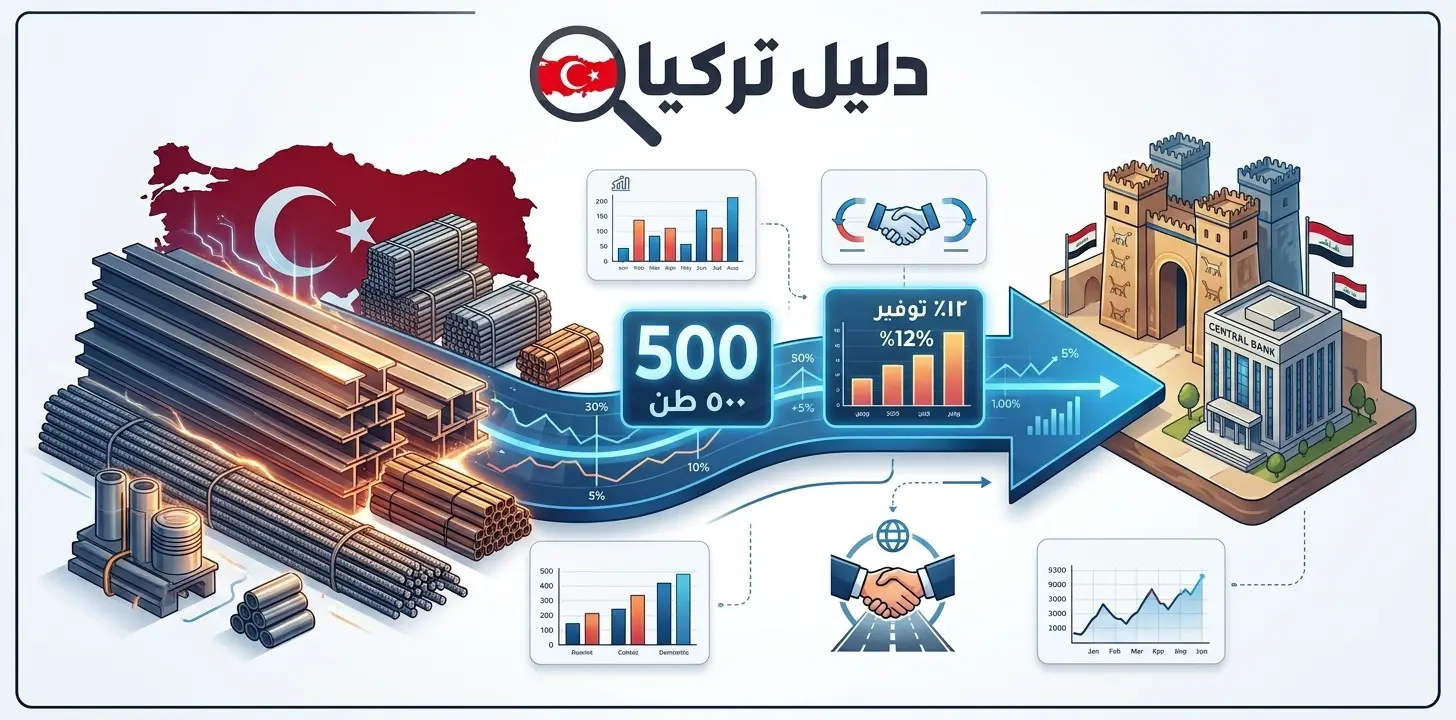
Assume that an Iraqi trader imports 500 tonnes of Turkish B500B reinforcing steel to Baghdad. The FOB purchase cost from Mersin is USD 282,500, calculated at USD 565 per tonne. Additional costs include USD 5,000 for inland transport from the factory to Mersin Port, USD 20,000 for sea freight from Mersin to Umm Qasr, USD 1,500 for marine insurance, estimated Iraqi customs duties of USD 25,000, USD 7,500 for inland transport from Umm Qasr to Baghdad, and USD 5,000 for customs clearance and other expenses.
The estimated total landed cost is USD 348,000, equal to approximately USD 696 per tonne. If the Baghdad local-market selling price ranges from USD 760 to USD 800 per tonne, the gross margin ranges from USD 64 to USD 104 per tonne. This represents an estimated gross margin of approximately 9% to 15%, while the net profit margin may range from around 5% to 10% after operating expenses, financing costs, storage, losses, and sales costs.
In a comparable Chinese scenario for the same quantity, the FOB purchase cost may be USD 240,000, based on USD 480 per tonne. With USD 40,000 for sea freight to Umm Qasr, USD 4,000 for insurance, USD 25,000 for customs duties, USD 7,500 for inland transport, and USD 5,000 for other expenses, the estimated total cost would be USD 321,500, or approximately USD 643 per tonne.
Based on the same Baghdad selling-price range, the estimated Chinese-steel gross margin would range from USD 117 to USD 157 per tonne, equivalent to approximately 18% to 24%. However, this higher potential margin comes with longer lead times, higher logistics exposure, and a greater need for strict pre-shipment quality inspection.
Why Choose Turkish Steel?
Turkish steel offers several advantages despite its potentially higher price. These include more consistent quality, frequent compliance with European standards such as EN 10080 for reinforcing steel, relatively easy access to Turkish Certificates of Origin, faster delivery, flexibility for small and medium-sized orders, and Arabic-speaking technical or sales support from many suppliers.
Chinese steel can involve additional risks, including longer shipping times, greater exposure to price movements during transit, variable quality between suppliers, difficulties in follow-up because of distance and time-zone differences, and the possibility of anti-dumping measures in some Arab markets. These risks do not mean that Chinese steel is unsuitable, but they increase the importance of supplier verification, pre-shipment inspection, and clear contractual specifications.
The exchange rate between the Turkish lira and the US dollar also affects the competitiveness of Turkish exports. A weaker lira can improve the export competitiveness of Turkish mills, although international scrap prices, energy costs, freight rates, and local demand remain major factors in the final offer price.
Outlook for Next Quarter
With the EU’s new quota system taking effect in July 2026, Turkish mills may increase their search for alternative markets, potentially creating downward pressure on offers for Arab buyers. At the same time, rising reconstruction demand in Libya, Iraq, and Syria may support prices and limit major declines.
Energy costs and geopolitical tensions remain important sources of uncertainty. Chinese expansion in Arab markets may also place additional competitive pressure on Turkish suppliers, especially in high-volume and price-sensitive projects.
For a new importer, CIF terms from a reliable Turkish mill are often the safer option, even if the unit cost is slightly higher. An experienced importer may negotiate FOB terms and appoint their own freight forwarder to control logistics costs. For very large orders, China may offer economies of scale, provided that independent quality inspection and strong supply-chain management are in place. For buyers who need rapid delivery, Turkish steel is often the stronger option despite a modest price premium.
During the current quarter of 2026, Turkish steel remains a strong choice for Arab importers seeking a balance between price, quality, delivery speed, and lower logistics risk. Chinese steel may offer higher potential margins for importers with large volumes, sufficient capital, and experience managing long supply chains. The final decision should depend on your commercial strategy, working capital, required delivery date, quality requirements, and ability to manage risk.