Importing Prefabricated Houses from Turkey – A Complete Guide for Arab Buyers In a world where time is moving faster and the need for efficient, rapid solution…
Importing Prefabricated Houses from Turkey – A Complete Guide for Arab Buyers
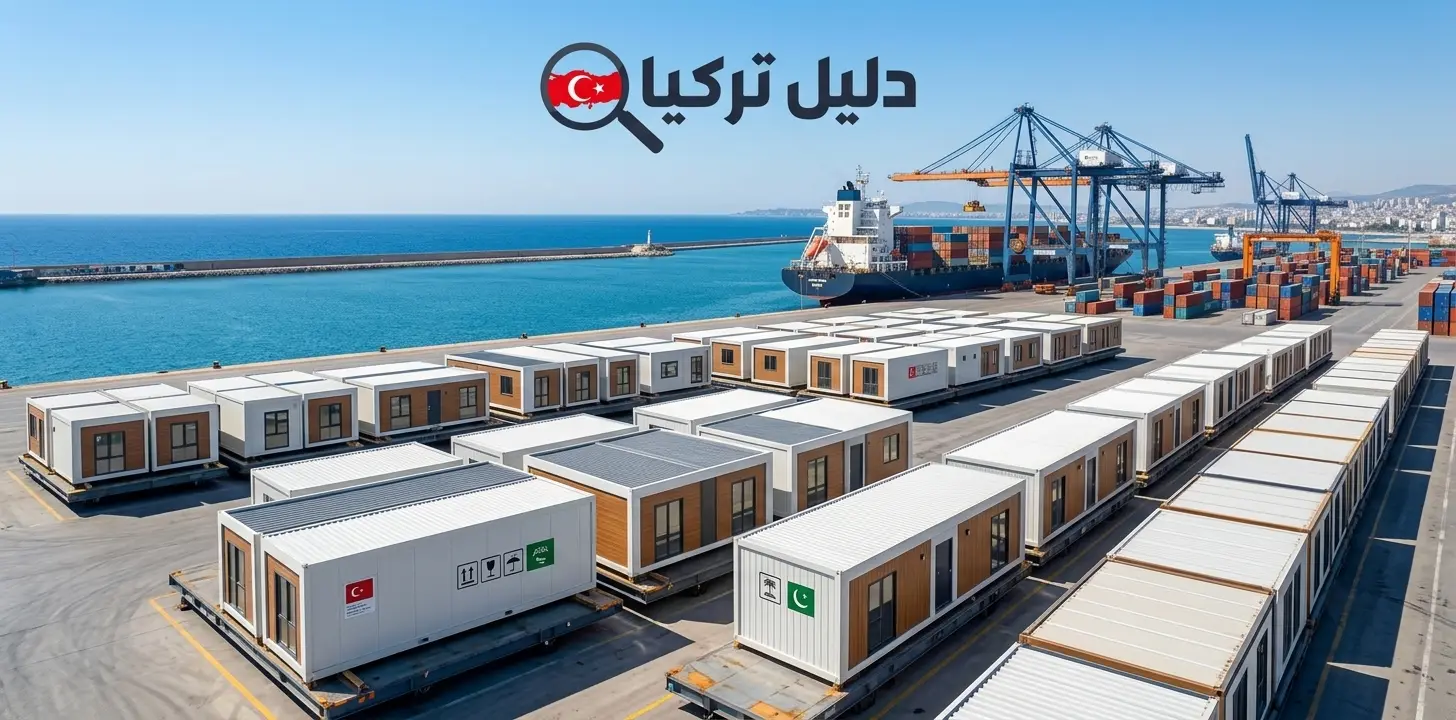
In a world where time is moving faster and the need for efficient, rapid solutions is increasing, prefabricated houses have emerged as one of the most important options in the construction sector. With reconstruction needs in Libya, Iraq, and Syria, as well as urban expansion in the Gulf region, demand for Turkish prefabricated houses continues to grow. Thanks to its geographic proximity to Arab markets and its extensive industrial expertise, Turkey has become a leading source for importing prefabricated buildings.
Reports from Turkey’s Ministry of Trade indicate growing exports of prefabricated buildings, particularly to Libya for post-conflict reconstruction projects, Iraq for rapid housing needs, Syria for temporary and permanent accommodation, Saudi Arabia for housing projects under Vision 2030, and the UAE for tourism and residential developments. Turkish prefabricated houses are known for quality based on European construction standards, competitive pricing compared with European alternatives, relatively fast production and short shipping distances, variety in design and materials, and the international experience of Turkish companies operating in more than 50 countries.
Types of Prefabricated Houses
By construction material, prefabricated houses may be classified into several types. Wooden houses are made from treated timber and offer a natural appearance, low weight, and good thermal insulation; however, they are generally less durable and require regular maintenance. Steel-frame houses are made from treated steel and are durable, earthquake-resistant, and quick to assemble, but they are usually more expensive. Lightweight concrete houses provide excellent sound insulation and fire resistance, although their heavier weight can increase shipping costs. Mobile or hybrid houses are flexible and relocatable, but may have a shorter service life depending on the design and materials used.
By use, prefabricated buildings include permanent residential homes, family houses, and housing complexes; temporary units for camps, emergency accommodation, and short-term projects; commercial facilities such as offices, shops, and restaurants; institutional buildings including schools, clinics, hospitals, and places of worship; and industrial facilities such as workshops, warehouses, and factories.
Insulation Specifications
Arab climates range from hot and humid conditions in the Gulf to colder weather in some mountainous areas. For this reason, insulation is one of the most important factors determining the success of a prefabricated house. Buyers should consider thermal insulation to reduce heat transfer, sound insulation to limit noise transmission, waterproofing to prevent water leakage, and fire insulation to improve fire resistance.
Relevant Turkish and European standards may include TS 825 for thermal insulation, TS EN ISO 717-1 for acoustic insulation, TS EN 13967 for waterproofing membranes, and TS EN 13501 for fire classification. However, buyers should always confirm the mandatory standards and approval procedures required in the destination country before placing an order.
Common insulation materials include glass wool, which provides thermal and acoustic insulation at a relatively low cost; rock wool, which provides thermal, acoustic, and fire insulation with strong fire resistance; polystyrene, which is lightweight, moisture-resistant, and easy to install; polyurethane, which offers superior thermal performance but is more expensive; and natural materials, which can provide thermal and acoustic insulation while offering environmental benefits.
Export Certificates and Documents
In addition to normal export documents, prefabricated houses may require a Turkish Standards Institution (TSE) conformity certificate, CE-related documentation where relevant to the intended market, earthquake-resistance documentation for projects in seismic areas, insulation-material certificates according to the importing country’s requirements, and a Turkish Certificate of Origin.
Procedures for the Turkish exporter may include submitting the export declaration, obtaining a Certificate of Origin from the Chamber of Commerce, arranging quality testing through TSE or an accredited laboratory, obtaining relevant conformity documents, and completing export customs clearance through a customs broker. The actual time required depends on product specifications, testing needs, destination-country regulations, and the availability of documents.
Installation Costs
Under the self-assembly option, the buyer installs the building using the supplier’s drawings and installation manual. This may reduce service costs, but it requires a competent local construction team and technical experience. Under the Turkish installation-team option, the exporter sends a team to supervise or complete installation, usually at an additional cost that may range from 15% to 30% of the building value. Under the local-agent option, a local representative or contractor performs installation, often at a cost ranging from 10% to 25% of the building value.
The quoted price for a prefabricated house commonly includes the main structural frame, roof and wall panels, windows, and doors. Thermal insulation, basic plumbing, basic electrical works, flooring, installation, shipping, insurance, foundations, and local permits may be included or excluded depending on the contract. Buyers should request a detailed bill of quantities clearly stating what is included, excluded, optional, and priced separately.
Customs Classification: HS Code 9406
The Harmonized System (HS) is the international system used to classify traded goods. HS heading 9406 covers prefabricated buildings, whether or not complete or already assembled. National subheadings may differ according to the building’s material, such as wood, steel, or other materials, and according to the customs schedule of the destination country.
Customs duties on prefabricated houses may range from 0% to 15%, depending on the importing country, applicable trade agreements, and the final customs classification. This differs from raw construction materials such as steel, cement, and marble, which are classified under separate HS codes and may have different duty rates. The importer should always confirm the final HS code, duty rate, VAT treatment, and required permits with a licensed customs broker before shipment.
For example, if a prefabricated house valued at USD 50,000 is imported into Saudi Arabia, assuming a 5% customs duty, the duty would be USD 2,500. If 15% VAT is then calculated on the customs value plus duty, the VAT would be USD 7,875. With additional charges estimated at around 2%, or USD 1,000, the total landed cost would be approximately USD 61,375. Actual customs and tax treatment must be verified before importation because rules and rates may change.
Leading Turkish Suppliers
Well-known Turkish companies in the prefabricated-building sector include Villa Yapı, which supplies prefabricated houses and site buildings; Karmod in Istanbul, which provides prefabricated houses and steel structures; Prefabrik Yapı in Konya, which supplies prefabricated and public buildings; Teknopanel in Adana, which produces prefabricated solutions and panels; Kolay Prefabrik, which supplies prefabricated houses and offices; and Aryol Prefabrik in Ankara, which provides prefabricated buildings for various markets.
Before selecting a supplier, verify the company’s legal registration, factory capacity, export experience, completed projects, reference clients, technical drawings, quality certificates, production lead time, warranty terms, and ability to provide after-sales support in your destination country.
Practical Import Steps
The process begins with research to determine the appropriate building type and supplier, which may take one to four weeks. The buyer then requests quotations from three to five suppliers, usually taking about one week, followed by negotiations on specifications, price, shipping terms, installation, warranty, and payment conditions, which may take one to two weeks.
After signing the supply contract, payment is arranged according to the agreed method. The prefabricated building is then manufactured, commonly within three to eight weeks, followed by pre-shipment quality inspection, which may take three to seven days. Shipping to the destination port may take one to three weeks, customs clearance in the importing country may take three to seven days, and installation at the final site may take one to four weeks, depending on the building size, site preparation, weather conditions, and local approvals.
Key Buyer Checklist
Importing prefabricated houses from Turkey can be a smart investment in an era of rapid construction and increasing demand for efficient solutions. Turkey’s geographic proximity, manufacturing experience, and competitive pricing make it a practical sourcing partner for many Arab buyers.
Start by defining your exact needs, including the building’s purpose, size, expected lifespan, climate conditions, local building-code requirements, and budget. Select a design that suits your use, confirm insulation specifications appropriate for your country’s climate, negotiate with several suppliers, and request detailed quotations that include production, packing, shipping, insurance, installation, foundations, customs documentation, and any local approvals.
Finally, remember that HS heading 9406 is generally the starting point for classifying prefabricated buildings, but the final customs code and applicable taxes must be confirmed in the destination country before shipment. Clear contracts, independent inspection, proper certification, and a complete cost calculation are essential for a smooth and successful import process.