Certificate of Conformity – A Guide to Mandatory Standards for Turkish Construction Materials Entering Seven Arab Markets Importing construction materials from…
Certificate of Conformity – A Guide to Mandatory Standards for Turkish Construction Materials Entering Seven Arab Markets
Importing construction materials from Turkey is not simply a matter of purchasing and shipping goods. One major obstacle can stand between you and a successful transaction: certification and conformity requirements. Every Arab country has its own rules, certificates, and standards that construction materials must meet before they can enter the market.
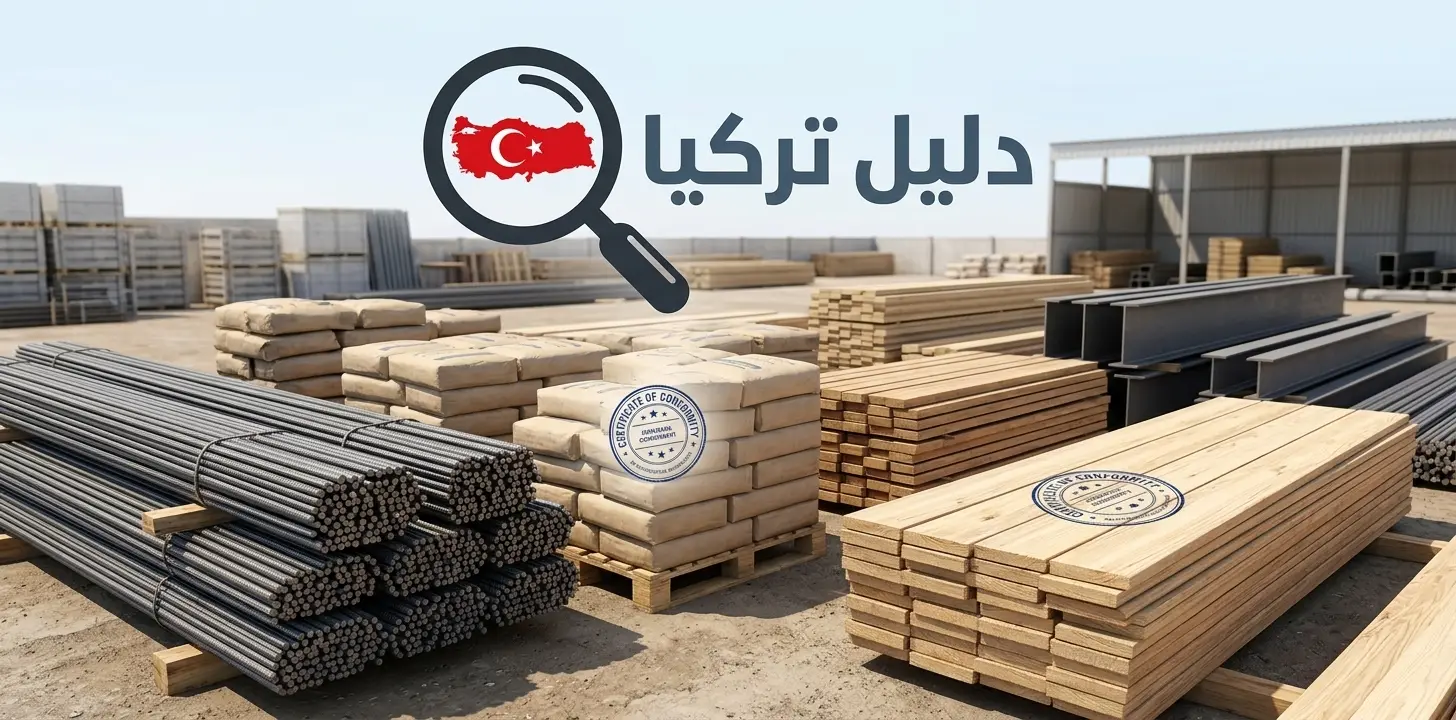
Certificates are essential for protecting consumers and ensuring that materials are safe and suitable for use. They help guarantee construction quality, ensure that buildings meet engineering standards, prevent low-quality materials from undermining fair competition, and support legal compliance. Without the required certificates, customs clearance may not be possible. Non-compliance can result in shipment rejection, financial penalties, delays lasting weeks or months, reputational damage, blacklisting, and possible legal liability.
Mandatory Standards in Seven Arab Countries
Saudi Arabia: Saudi Arabia requires SASO conformity procedures through the SABER electronic platform for products such as iron and steel, ceramics, insulation materials, marble, prefabricated buildings, and paints. Products must comply with applicable SASO standards. Additional requirements may apply to thermal insulation, pre-shipment quality inspections, prefabricated buildings, and volatile organic compound (VOC) limits for paints. Importers should verify the latest SABER labelling, importer-registration, and product-specific requirements before shipping. Website: https://saber.sa
United Arab Emirates: The UAE applies conformity requirements through the Ministry of Industry and Advanced Technology and relevant local authorities. Requirements may apply to iron and steel, ceramics, insulation materials, marble, prefabricated buildings, and paints. Products must comply with applicable UAE technical regulations and standards. Thermal insulation, quality testing, municipal approvals for prefabricated buildings, and VOC requirements for paints may be required depending on the product and emirate. Website: https://www.moiat.gov.ae
Kuwait: Kuwait applies the Kuwait Conformity Assurance Scheme (KUCAS) through the Public Authority for Industry for regulated products. Requirements may apply to iron and steel, ceramics, insulation materials, marble, prefabricated buildings, and paints. These may include quality inspections, thermal-insulation requirements, municipal approvals for prefabricated buildings, and environmental requirements for paints. Website: https://www.pai.gov.kw
Qatar: Qatar requires imported products to comply with applicable Qatari technical specifications and regulatory procedures administered by the relevant authorities. Construction materials such as iron and steel, ceramics, insulation products, marble, prefabricated buildings, and paints may require conformity documentation, quality inspection, and product-specific approvals. Additional municipal requirements may apply to prefabricated buildings, while paints may be subject to environmental and VOC controls. Website: https://www.moci.gov.qa
Oman: Oman applies conformity and quality requirements through the competent standards and metrology authorities. Requirements may apply to iron and steel, ceramics, insulation products, marble, prefabricated buildings, and paints. Importers may need to provide test reports, conformity documents, thermal-insulation evidence, municipal approvals for prefabricated buildings, and environmental documentation for paints. Website: https://www.dgsm.gov.om
Egypt: Egypt applies product-control and conformity procedures through the relevant Egyptian authorities, including the General Organization for Export and Import Control (GOEIC) and the Egyptian Organization for Standardization and Quality (EOS). Requirements may apply to iron and steel, ceramics, insulation materials, marble, prefabricated buildings, and paints. These may include mandatory conformity certificates, quality inspection, thermal-insulation requirements, approvals for prefabricated buildings, and environmental requirements for paints. Website: https://www.eos.org.eg
Iraq: Iraq requires conformity documentation and product inspection through the Central Organization for Standardization and Quality Control and other relevant authorities. Requirements may apply to iron and steel, ceramics, insulation materials, marble, prefabricated buildings, and paints. Importers may be required to provide laboratory test reports from approved laboratories, quality-inspection documents, thermal-insulation evidence, municipal approvals for prefabricated buildings, and environmental documentation for paints.
Other International and Regional Standards
CE Marking: CE marking is important for the European market and can support a product’s technical file in some Arab markets, especially in projects financed by European institutions. However, CE marking does not automatically replace national conformity requirements in the importing country.
GCC Conformity Mark: The Gulf Cooperation Council Standardization Organization (GSO) manages regional conformity systems for certain regulated product categories. The GCC Conformity Mark is particularly relevant to products covered by applicable Gulf technical regulations. Importers should confirm whether their specific construction product falls within a regulated category.
ISO 9001: ISO 9001 is a quality-management-system certification. It is not normally a substitute for product conformity certification, but it can strengthen buyer confidence by demonstrating that the manufacturer operates a recognised quality-management system.
TSE Certificate: The Turkish Standards Institution (TSE) issues certificates related to conformity with Turkish standards. A TSE certificate can be helpful when preparing product documentation, but it does not automatically replace certificates required by the destination country.
Practical Tips to Avoid Clearance Problems
Before purchasing: Research your country’s exact requirements before signing a supply contract. Make the required certificates and test reports a clear condition of the supply agreement. Verify the validity of certificates, as some have expiry dates or apply only to specific product models and factories. Request samples and, where appropriate, test them through an accredited laboratory in your destination country.
During production: Monitor the production process to ensure that the goods comply with the agreed technical specifications. Use an independent inspection laboratory rather than relying solely on the factory’s internal testing. Keep representative samples for comparison upon arrival.
Before shipping: Ensure that every document is complete, accurate, and consistent with the invoice, packing list, purchase order, and shipping documents. Obtain a Turkish Certificate of Origin where required for customs clearance. Work with a reliable customs broker who understands the destination country’s regulations and the relevant product category.
After receipt: Inspect the goods immediately and confirm that they match the specifications, samples, and contractual requirements. Report any non-conformity to the supplier without delay. Keep all certificates, test reports, invoices, inspection reports, and customs documents for at least five years, or longer if local law or the project contract requires it.
Regulatory Updates for 2026
Regulations for construction materials can change frequently, especially regarding product labelling, importer registration, environmental requirements, energy efficiency, insulation standards, and digital conformity systems. Before each shipment, verify the current requirements directly with the official authority in the destination country and with your local customs broker.
Importers should follow the official websites of the competent authorities in each country, subscribe to updates from local chambers of commerce, consult a local customs broker before every shipment, and monitor the WTO Technical Barriers to Trade (TBT) notifications for regulatory changes.
Certificates of conformity are not merely bureaucratic obstacles. They are quality and safety safeguards that protect consumers, importers, suppliers, and construction projects. Understanding these requirements is essential to successfully importing construction materials from Turkey into Arab markets. Before starting any import transaction, identify the exact certificates required in your country, include them in the supply contract, and make sure they are obtained before shipment. Investing time and effort in compliance can protect you from much larger losses in the future.