Mersin Port: The Heart of Turkish Exports – Why Do 60% of Construction-Materials Exports to the Middle East Pass Through It? When Arab importers discuss import…
Mersin Port: The Heart of Turkish Exports – Why Do 60% of Construction-Materials Exports to the Middle East Pass Through It?
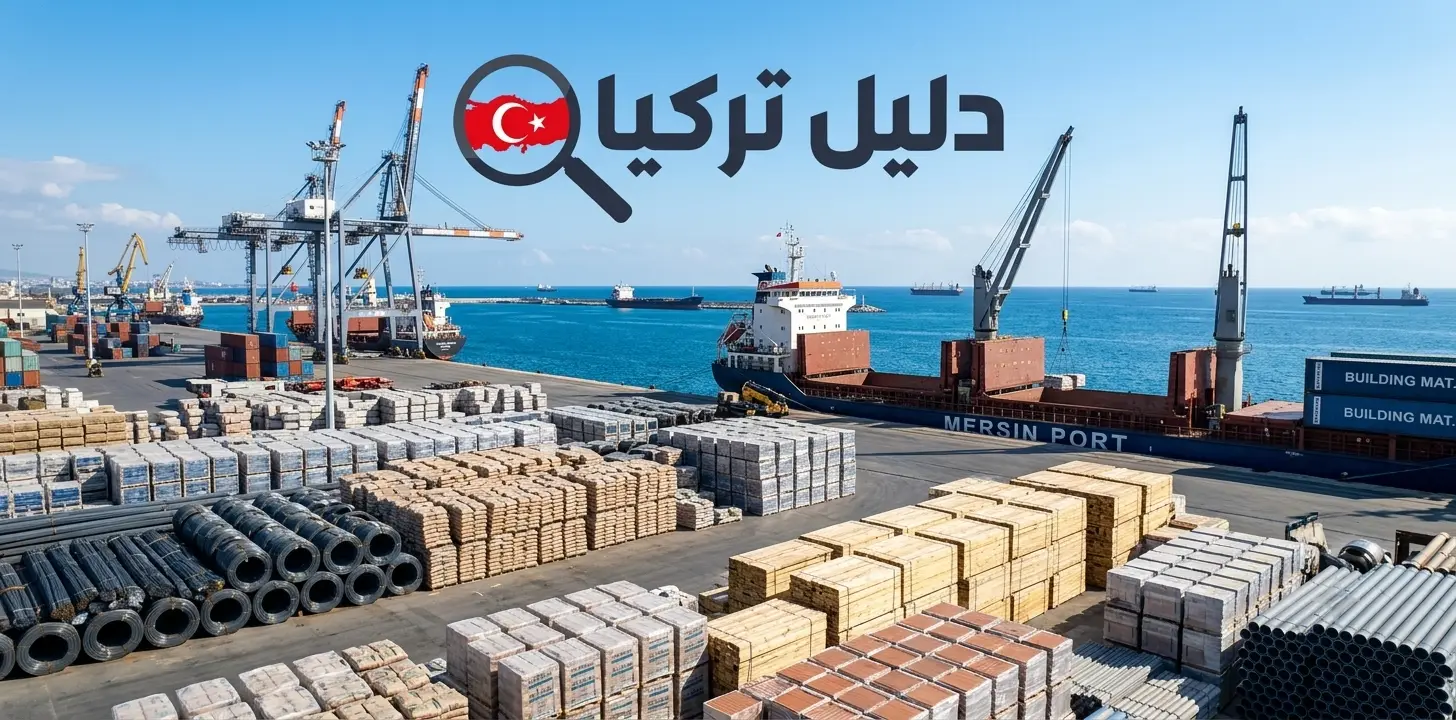
When Arab importers discuss importing construction materials from Turkey, Mersin Port is usually at the top of their preferred-port list. This is no coincidence: Mersin is not merely a port, but a vital gateway for Turkish exports to the Middle East and North Africa.
Mersin Port is located in southern Turkey on the Mediterranean coast. It is one of Turkey’s leading ports and an important logistics hub linking the country with the Middle East, North Africa, Europe, and other global markets. The port handles approximately 22% of Turkey’s container exports and serves major industrial regions through strong road and rail connections.
Mersin benefits from its proximity to industrial areas in Central Anatolia, the Mediterranean region, and southeastern Turkey, where many steel, ceramic, marble, and construction-material manufacturers are located. It also has advanced logistics infrastructure, direct shipping links to regional markets, and extensive cargo-handling facilities suitable for heavy and containerised construction materials.
Comparison of Turkish Ports
Mersin Port: Located in southern Turkey, Mersin has strong proximity to manufacturing areas in Central Anatolia and the Mediterranean region. It offers numerous direct shipping lines to Arab markets, extensive logistics and storage facilities, relatively competitive inland transport costs, and significant future expansion capacity. It is highly suitable for construction materials.
Iskenderun Port: Located in southeastern Turkey, Iskenderun is particularly close to major steel-production facilities. It has moderate shipping connectivity to Arab markets, large open storage areas, competitive inland transport costs, and generally lower congestion. It is also highly suitable for steel and other heavy construction materials.
Ambarli Port, Istanbul: Located in north-western Turkey, Ambarli is farther from many manufacturing areas in Central and southern Anatolia. It has moderate shipping connections to Arab markets, more limited open-storage availability for heavy cargo, higher inland transport costs for southern and central Turkish manufacturers, and typically higher congestion. It remains suitable for some construction-material shipments, especially those produced near Istanbul and north-western Turkey.
Why Mersin Is Preferred
Mersin is preferred because of its proximity to key production centres. Steel mills are located in areas such as Iskenderun, Adana, and Konya; ceramic factories operate in Konya and Eskişehir; and marble quarries and processors are active in Bursa and Afyon. For many suppliers, Mersin can offer a more practical export route than ports around Istanbul.
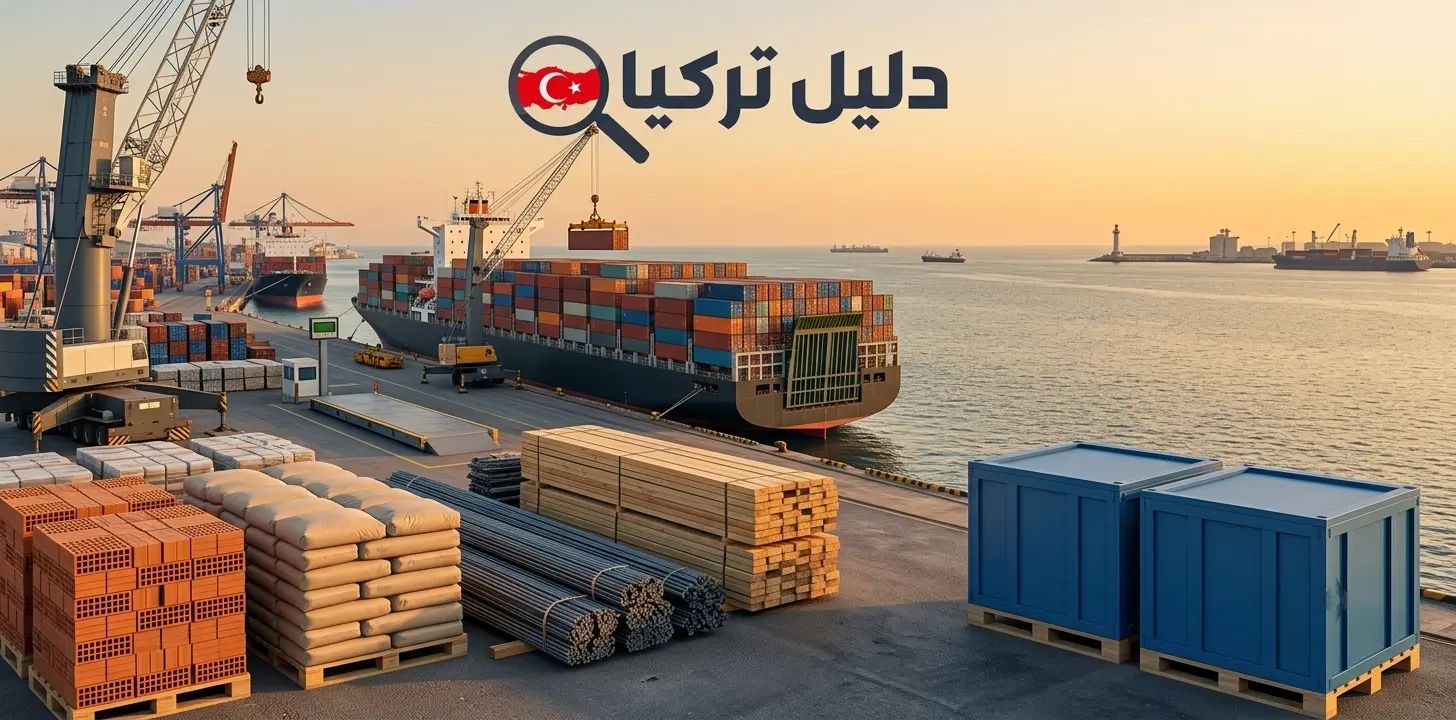
The port also has direct maritime links to major Arab ports, helping reduce transit time and avoid unnecessary transhipment. Its specialised infrastructure supports heavy construction materials through cargo-handling equipment, container terminals, open storage areas, and logistics providers experienced in export shipments.
Some market estimates suggest that around 60% of Turkish construction-material exports to the Middle East move through Mersin, compared with approximately 25% through Iskenderun, 10% through Ambarli, and 5% through other ports. These figures may vary depending on the product type, destination, shipping-line schedules, and current market conditions.
Practical Shipping Guide
The practical process begins with selecting a factory located near Mersin, where possible. Inland transport from the factory to the port is arranged by the exporter or freight forwarder, depending on the agreed Incoterm. Export customs clearance is handled through a Turkish customs broker, the shipping line loads the cargo onto the vessel, the insurance company provides cargo insurance where required, and the importer tracks the shipment until it reaches the destination port.
Approximate costs for a 20-foot container may include inland transport from Konya to Mersin of USD 300 to USD 500, port charges including handling and clearance of USD 200 to USD 400, and sea freight from Mersin to Jeddah of USD 800 to USD 1,200. Freight to Dubai may range from USD 700 to USD 1,000, to Alexandria from USD 400 to USD 700, and to Umm Qasr in Iraq from USD 600 to USD 900. Actual costs vary according to season, carrier, cargo type, fuel prices, and container availability.
When selecting a freight forwarder, look for proven experience with construction materials and heavy cargo, strong local networks in Mersin, clear communication in Arabic where needed, transparent and itemised quotations, and a good reputation based on verified customer experience.
Future Expansion
Mersin International Port has announced and implemented major expansion plans under the East Med Hub 2 project, with investment reported at approximately USD 455 million. The project includes expanded berthing capacity, additional yard space, modern handling equipment, and digital systems designed to improve operational efficiency.
The expansion is expected to increase annual container capacity from approximately 2.6 million TEUs to 3.6 million TEUs. It also includes facilities capable of handling larger next-generation container vessels, which can help reduce congestion, shorten waiting times, improve loading and unloading speed, and strengthen the port’s role in regional trade.
Mersin Port is a central gateway for Turkish construction-material exports to Arab markets. Its strategic Mediterranean location, proximity to industrial production centres, direct maritime connections, and developed logistics infrastructure make it a preferred option for many Arab importers. If you are planning to import construction materials from Turkey, Mersin should be considered as a major shipping option, especially when your supplier is located in Central, southern, or southeastern Turkey.